
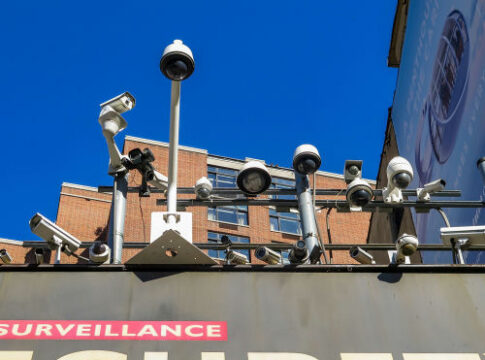
The important fact is not merely that Madison Square Garden kept a surveillance database; it is that the database, by the available reporting, appears to have moved beyond ordinary venue security into the classification of people by identity, social status, and perceived “risk.” That is the line that makes the story consequential, because once a venue begins building watch lists at that level of granularity, the question is no longer only who gets screened at the door, but who gets profiled before they ever arrive.
Key Points
- The strongest reporting indicates MSG maintained a long-running database with identity and risk tags, including an explicit “LGBTIA” label.
- The available evidence supports the existence of surveillance and categorization; it does not fully prove the private intent behind every tag or that LGBTQIA people were the sole target.
- MSG’s public defense is categorical denial, but it does not directly rebut the specific database artifacts described in the reporting.
- The broader pattern fits a larger arena-security trend: facial recognition, watch lists, and social-media monitoring increasingly serve exclusion and control as much as safety.
What the Database Seems to Have Been For
On the record available here, the database was not a simple incident log. WIRED’s reporting describes entries dating back to December 2020, with updates as recent as June 2024, and says the records contained tags such as “LGBTIA,” “SM concerns,” “DO NOT,” and varying levels of “risk.” That matters because classification is the essence of modern surveillance. A venue can always say it is looking for threats; once it starts attaching labels to people, especially labels that map onto identity or social behavior, it is doing more than reacting to misconduct. It is building a predictive apparatus that turns observation into sorting.
The reporting also says the database was used to identify people seeking complimentary tickets and to sweep social media for useful signals. In practice, that is a familiar pattern in contemporary venue security: the system begins as a tool for safety and ends as a tool for privilege management, reputational triage, and selective exclusion. The database’s breadth—celebrities, public figures, superfans, and other attendees—suggests MSG was not merely tracking banned individuals. It was mapping social relationships and perceived status around the arena itself.
Why the LGBTQIA Angle Matters
The reason the “gay celebrities” framing drew immediate attention is that identity-based tagging changes the moral character of the surveillance. A generic risk score, however intrusive, can still be defended as a crude security heuristic; a tag naming sexuality or gender identity moves the system toward discrimination, whether or not the organization admits that intent. The strongest evidence here shows explicit labels existed in the database. What it does not show, at least in the material provided, is a memo, policy, or executive directive saying the system was built primarily to monitor LGBTQIA people. That distinction matters. Evidence of discriminatory effect is substantial; evidence of discriminatory purpose is suggestive but not yet documentary.
That is why the available record supports a serious allegation without making the allegation airtight in its most expansive form. The database appears to have treated identity as a searchable field, and a former security staffer’s account, as reported by Democracy Now!, says a trans woman was singled out because of gender identity. WIRED also reported on a separate lawsuit involving obsessive tracking of a trans woman over two years. Taken together, those accounts suggest more than incidental bias. They suggest a surveillance culture in which identity was not neutral background information but part of the logic of attention.
How MSG’s Defense Works, and Where It Falls Short
MSG’s public response is straightforward: the company says the allegations are “false, misleading, unverified,” and its broader position is that surveillance exists to identify threats, violent patrons, and rule violators. That is a standard arena-security defense, and in the abstract it is not implausible. Large venues do need layered security, and modern public-event management often relies on video systems, access control, and watch lists to reduce risk. The problem is that a general security rationale does not answer a specific forensic claim. If the records really contain identity-based tags and tiered risk designations, then “we use security” is not a refutation; it is an explanation of the category, not the conduct.
The counter-evidence is real, but it is not decisive against the core facts. MSG attorneys, according to WIRED, also argued that one trans woman’s stalking allegation was fabricated to tarnish the company’s reputation. That is a direct challenge to a particular accusation, and it should not be waved away. Yet the legal posture of a defamation-style response is different from a forensic rebuttal. It contests credibility. It does not by itself account for the database artifacts, the metadata timeline, or the reported internal classifications described in the leak-based reporting. In other words, MSG has issued denials; it has not, in the material provided, produced a public audit that neutralizes the evidence trail.
Why the Broader Surveillance Context Changes the Reading
This controversy lands in a much larger shift across entertainment venues: surveillance systems increasingly do double duty as security and behavioral governance. Industry material on venue security openly describes layered defenses, advanced surveillance, and real-time monitoring as core features of modern operations. That baseline matters because it explains how systems like MSG’s become normalized. Once a venue accepts constant monitoring as operationally ordinary, the leap from security to profiling can happen quietly, almost administratively. The technical tools are the same; the governance boundaries are what change.
That broader pattern is exactly why the MSG case resonates beyond one arena. The evidence provided here fits what privacy researchers and event-industry observers have been warning about for years: facial recognition and data-labeling systems, when used without transparent limits, can become instruments of exclusion rather than safety. The deeper issue is not whether arenas may ever use surveillance. They plainly will. The issue is whether the public gets any meaningful constraint on what is collected, how people are categorized, and whether sensitive identity traits are folded into a private risk architecture with almost no external accountability.
Madison Square Garden has assigned labels to roughly 400 celebrities, Knicks superfans, and Taylor Swift wedding guests, which include sexual orientation and risk level, as part of its 39,539-person VIP database.
A Boogie Wit da Hoodie: High Risk
Adam Pally: Do Not Host
Anna… pic.twitter.com/ZIgUTPaEp1— Front Office Sports (@FOS) July 9, 2026
What Remains Unproven, and What Would Change the Story
The strongest version of the claim—that MSG knowingly maintained a database for the primary purpose of targeting LGBTQIA people—still depends on inference. The evidence package points to explicit tags, long-running storage, and troubling reported conduct, but it does not include the most probative materials: internal policy memos, executive testimony, or a comparative statistical analysis of how risk scores were assigned across identity groups. Those are not trivial omissions. They are the difference between a persuasive allegation and a fully documented institutional finding.
What would settle the issue is equally clear. An independent forensic audit of the underlying data dump, discovery in the class-action case, or internal communications authorizing identity-based tagging would dramatically sharpen the public record. So would comparative analysis showing whether LGBTQIA-tagged individuals were disproportionately assigned higher-risk classifications than similarly situated non-LGBTQIA individuals. Until then, the most responsible reading is direct: the available evidence strongly supports the existence of a discriminatory-leaning surveillance database, while leaving the precise intent behind it not yet fully proven.
Sources:
feedpress.me, wired.com, instagram.com, democracynow.org, youtube.com, frontofficesports.com, facebook.com, inc.com, omnilert.com, pmc.ncbi.nlm.nih.gov