
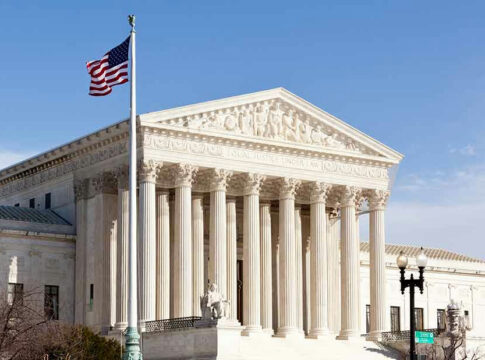
A landmark Supreme Court ruling just backed Trump’s fight to keep biological boys out of girls’ sports — and he is calling it the end of a “ridiculous situation.”
Story Snapshot
- Supreme Court upholds state laws that keep biological males out of girls’ and women’s sports in a 6–3 decision.
- Trump celebrates the ruling as proof that his executive order and Title IX policies were right all along.
- Twenty‑seven states already restrict transgender participation in female sports; this ruling strengthens those protections for women and girls.
- Left‑leaning groups and media call the decision discriminatory and promise more lawsuits and protests.
Supreme Court Backs Sex-Based Sports, Not Gender Ideology
The Supreme Court has ruled 6–3 that states may base girls’ and women’s sports on biological sex not self-declared gender, in challenges from Idaho and West Virginia to their “fairness in women’s sports” laws. The majority read Title IX, passed in 1972, as protecting separate female sports categories built on sex, not gender identity, and found that this structure serves the goal of fair competition for women and girls. This ruling leaves in place state bans that keep athletes who are biologically male out of girls’ teams, even if they identify as female.
State lawyers defending these laws argued that sex is closely tied to key athletic traits like size, bone density, muscle mass, and lung capacity, which together create a built‑in advantage for males in most sports. They pointed out that Title IX and the Fourteenth Amendment have long allowed sex‑separate teams so women can have meaningful chances to compete and win. In short, the Court accepted that protecting girls’ sports means recognizing basic biology, not rewriting categories to match ideology.
Trump’s Executive Order Helped Set the Stage
This Supreme Court win lands on top of the Trump administration’s broader push to defend women’s sports. In February 2025, Trump signed the “Keeping Men Out of Women’s Sports” executive order, declaring that schools which let biological males compete in female categories or enter girls’ locker rooms would be investigated and could lose federal funding under Title IX. The order made it national policy to rescind funds from any education program that deprives women and girls of fair athletic opportunities.
Trump’s order also told federal agencies and diplomats to push sex‑based standards in international sports, including at the Olympic level, arguing that eligibility for the women’s category must be based on sex, not gender identity or testosterone suppression. By tying funding and federal enforcement to sex‑based fairness, the administration signaled that protecting female athletes is a core civil rights issue, not a side debate. This stance matched the growing movement in Republican‑led states passing their own bans on transgender participation in girls’ sports starting with Idaho in 2020.
States Move Fast to Protect Girls’ Sports
Since Idaho became the first state to restrict transgender students’ access to girls’ sports in March 2020, there has been a rapid wave of similar laws across the country. Research from the Movement Advancement Project shows that by 2025–2026, 27 states had laws or regulations blocking transgender students from competing in sports that match their gender identity rather than their sex at birth. Many of these laws span K–12 and college sports and apply to both interscholastic and intramural competitions.
These efforts reflect deep concern from parents, coaches, and female athletes who say they are seeing their daughters lose records, titles, and scholarships when biological males enter girls’ divisions. Over 100 athletes, coaches, and parents, including nearly three dozen Olympians, have publicly backed state bans, arguing they are needed to preserve equal opportunity for women. Their advocacy helped build the political momentum behind these laws and shaped the cases that just reached the Supreme Court.
Media, Activists, and Liberal Justices Push Back
Civil rights organizations such as the American Civil Liberties Union argue that these bans are discriminatory and clash with earlier Supreme Court rulings like Bostock v. Clayton County, which held that discrimination based on gender identity in the workplace is a form of sex discrimination. They say any rule that bars transgender girls from girls’ teams violates federal law and the Equal Protection Clause because it refuses to look at each athlete’s medical situation or hormone treatment. Liberal justices echoed this line, issuing a partial dissent that questioned the majority’s focus on biological differences and numbers of transgender athletes.
The U.S. Supreme Court on Tuesday kept in place state laws banning transgender athletes from participating on women’s and girls’ sports teams, @jacob_fischler and @ShauneenMiranda report. https://t.co/yLzlJL59BM
— Kathie Obradovich (@KObradovich) June 30, 2026
Mainstream outlets including CNN, The New York Times, and Politico have framed the 6–3 ruling as a setback for transgender rights and highlighted protests outside the Court while giving far less attention to demonstrators cheering for women’s sports. Reports from advocacy groups stress the emotional impact these bans have on transgender youth and claim there is no clear, categorical athletic advantage for transgender women post‑hormone therapy, though they also admit the data are limited. This media treatment feeds the perception that any move to protect girls’ sports from male competition is “discrimination,” rather than a defense of basic fairness and safety.
What This Means for Parents, Coaches, and Girls
For families in the 27 states with sports bans, the Supreme Court decision gives stronger legal ground and clearer rules: girls’ sports are for biological girls, and schools that follow that standard are on solid footing. Trump’s executive order and this ruling work together, backing up schools that stand firm and warning those that try to blur sex categories that they could face federal enforcement and loss of funding. At the same time, the decision does not automatically change policies in the remaining states, which means battles over school boards, legislatures, and courts will continue.
Supporters see this moment as a major victory for Title IX and for common sense, but also as a reminder to stay alert. Activist groups and liberal judges are already looking for new angles to challenge sex‑based sports rules and to expand gender ideology in other parts of education law. For conservatives who care about their daughters’ safety, scholarships, and fair play, the message is clear: the Constitution, Title IX, and now the Supreme Court all recognize that protecting women’s sports means drawing a hard line based on biological sex — and staying engaged so that line does not quietly erode in the years ahead.
Sources:
[1] Web – BREAKING: Supreme Court Upholds Schools’ Right to Ban Biological Boys …
[2] Web – Supreme Court arguments on transgender athletes in sports – CNN
[3] Web – Justices Seem Inclined to Allow States to Bar Transgender Athletes
[4] YouTube – Supreme Court seems likely to allow state bans of transgender …
[10] Web – Ban on Transgender Women From Female Sports Is Challenged in …
[11] Web – What’s at Stake as the Supreme Court Takes Up Transgender Sports …
[13] YouTube – Supreme Court weighs challenges to state bans on transgender …
[14] Web – Bans on Transgender Youth Participation in Sports
[15] Web – US Supreme Court conservatives lean toward allowing transgender …
[19] Web – Transgender exclusion in sports – American Psychological Association