
A university president inching his Cadillac through a human blockade after an Israel–Palestine debate is more than campus drama; it is a stress test of whether American institutions still have the backbone to defend free speech against mob tactics.
How a Debate Night Ended in a Parking-Lot Standoff
On April 30, 2026, Cornell tried something universities claim to crave but rarely pull off: a structured Israel–Palestine debate co-sponsored by groups ranging from Cornellians for Israel to Students for Justice in Palestine. After offering remarks about open discourse, President Michael Kotlikoff headed to a nearby campus lot. A cluster of activists from Students for a Democratic Cornell and allies followed, cameras out, ready to confront him over what they call repression of pro-Palestinian speech.
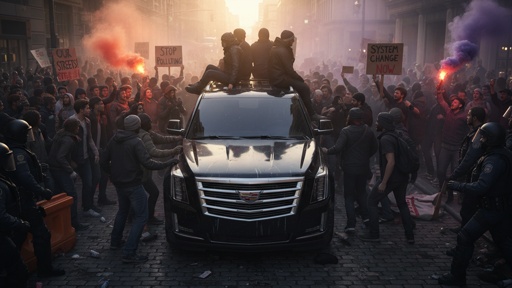
Video from the lot shows protesters surrounding Kotlikoff’s black Cadillac SUV, milling behind the bumper and along the sides while shouting questions and accusations. They did not merely hold signs at a distance; they physically positioned themselves between a private citizen and his ability to leave. Protesters later claimed he backed into them and even ran over a foot. Cornell says its enhanced surveillance footage shows no obvious sign of injury and characterizes the behavior as harassment, not peaceful petitioning.
The Clash of Narratives: Vehicular Assault or Manufactured Martyrdom?
The core facts are simple: a car, a crowd, and a tense few seconds of movement. The meaning of those seconds is what the culture war is fighting over. Protesters frame the president as an aggressor weaponizing a vehicle against vulnerable students. Cornell’s leadership, after reviewing multiple video angles, rejects that framing and instead emphasizes that Kotlikoff waited for a clear path on his backup camera and then carefully maneuvered out while encircled by agitators intent on blocking him.
From a common-sense, rule-of-law perspective, the weight of evidence leans toward Cornell’s account. A driver boxed in by people who walk behind a running vehicle assumes obvious risk. Adults who choose to surround a car, especially after being warned or seeing it in motion, bear responsibility for their own safety. Americans who grew up learning basic street smarts recognize the difference between an intentional ramming and a slow, hesitant exit from an improvised human cage.
Why Cornell’s Response Breaks the Recent Campus Pattern
Cornell did something many universities have been terrified to do since 2023: it moved quickly, released its own surveillance footage, and called the conduct what it viewed it to be—harassment and intimidation of the institution’s top officer. The trustees then publicly backed the president and declined to punish him or pursue complaints against the students, even while stating that the protesters’ behavior violated norms of respectful and safe expressive activity.
This combination matters. The board rejected the activists’ most incendiary claims yet did not turn them into martyrs by hauling them into court or demanding expulsions. That balance reflects a conservative instinct that many parents and alumni share: enforce lines against mob behavior, defend legitimate debate, and avoid turning every confrontation into a show trial. The message is clear: protest the debate, not the right of other people to walk—or drive—away from you.
From Encampments to Car Blockades: Escalation by Other Means
This incident did not come out of nowhere. Cornell had already dealt with encampments, disciplinary actions, and a suspended Students for Justice in Palestine chapter. Activists angered by sanctions and by Cornell’s ties to Israeli institutions had been looking for ways to keep pressure on the administration. When a rare bipartisan debate series appeared, it became both an opportunity for dialogue and a stage for confrontation. Some protesters, including individuals previously banned from campus, chose the latter script.
Blocking a president’s car might feel to young activists like principled disruption, but average Americans see something different: a minority attempting to veto speech and movement through physical dominance rather than persuasion. That tactic erodes sympathy. It also blurs the line between protest and coercion in ways that should concern anyone who values civil society. If a president can be hemmed in today, what stops the same crowd from surrounding a visiting speaker, a Jewish student, or a maintenance worker tomorrow?
What This Reveals About Free Speech, Safety, and Authority
The deeper conflict at Cornell is not over a Cadillac bumper; it is over who sets the rules of engagement in a pluralistic campus environment. One side argues that “resistance” justifies increasingly aggressive tactics—interruption, encampment, blockade. The other insists that debate must happen inside boundaries that protect safety and allow unpopular voices to be heard without fear of mob retaliation. Cornell’s embrace of a structured Israel–Palestine series shows where its administration wants to land: fierce argument, controlled environment.
American conservative values generally align with that posture. Robust speech, yes; physical intimidation, no. The more institutions reward those who shout “vehicular assault” every time their blockade fails, the more they incentivize bad-faith escalation. Cornell’s stance suggests a belated recognition that appeasement only encourages the next stunt. Students still have avenues to protest, write, organize, and argue. What they do not have is a moral or legal right to trap someone in a parking space until he submits to their demands.
Cornell backs university prez held hostage in his car by student radicals after Israel-Palestine debate series https://t.co/X37xGvq2ht pic.twitter.com/RryAlyUzPy
— New York Post (@nypost) May 17, 2026
Universities across the country are watching this case as they weigh their own responses to increasingly theatrical activism around Israel and Palestine. If Cornell’s firm but measured approach holds, it could provide a template: protect debate, draw bright lines against mob tactics, rely on video evidence rather than viral edits, and refuse to redefine intimidation as “speech.” Whether other institutions will show similar backbone—or continue to let the loudest crowd dictate terms—will shape campus culture far beyond one upstate parking lot.
Sources:
Anti-Israel students surround car of Cornell president; claim he tried to run them over