

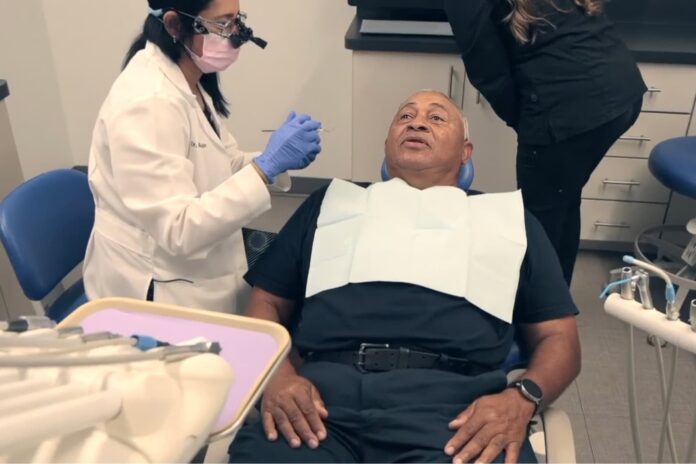
Los Angeles Mayor Karen Bass announced a controversial proposal this week to provide comprehensive dental care to homeless individuals struggling with methamphetamine addiction, with costs covered by taxpayers. The program would address severe dental damage caused by drug use, including extractions, implants, and bone grafts that could cost tens of thousands of dollars per person.
The Proposal’s Scope and Costs
Speaking at a public event, Bass highlighted the dental crisis among homeless populations. “How many people who are unhoused that you meet have no teeth at all?” she asked. “They don’t have teeth, why? Because meth rots your teeth. You can’t succeed without teeth! So there needs to be comprehensive healthcare provided to people.” The mayor’s plan would cover extensive procedures including dental implants at roughly $6,000 per tooth, extractions at $300 each, and potentially bone grafts and sinus lifts required for severe cases.
Financial Concerns and Implementation
The total cost per individual could range from $30,000 to $80,000, according to dental cost estimates. Critics point out that the program would likely funnel funding through nonprofit organizations, potentially increasing expenses significantly. This approach mirrors previous California programs where administrative costs substantially inflated final price tags. The proposal comes as Medicare does not cover dental care for Americans who worked their entire lives and contributed to the system through payroll taxes.

Political Context and Opposition
Bass faces mounting criticism over the city’s ongoing homelessness crisis and rising concerns about public safety and quality of life. Republican challenger Spencer Pratt has gained significant attention following recent debates, though recent polling shows Bass maintaining support among likely voters. The dental care proposal adds fuel to broader debates about resource allocation and priorities in addressing Los Angeles’s complex challenges surrounding addiction, homelessness, and public services.
What This Means
The proposal reflects competing philosophies about government assistance and accountability. Supporters argue comprehensive healthcare enables recovery and self-sufficiency, while opponents question whether expensive dental procedures should be prioritized when law-abiding citizens pay out-of-pocket for the same services. The debate highlights broader tensions about how cities should address addiction and homelessness while managing limited public resources and maintaining fairness for working taxpayers who fund these programs.