
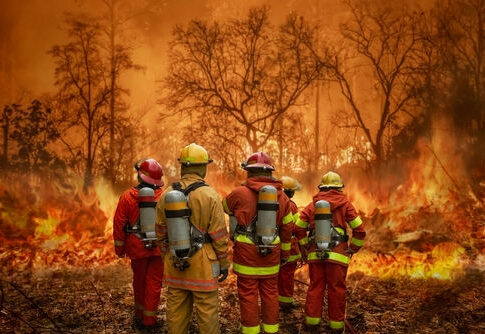
Three firefighters died on a Colorado ridge while wind turned a routine wildfire into a lethal, racing wall of flame.
Story Snapshot
- Three federal wildland firefighters killed and two injured in a sudden burnover on the Snyder Fire
- Multiple wind driven fires scorch tens of thousands of acres with almost no containment and rolling evacuations
- Emergency declarations activate the Colorado National Guard and push rural communities to the edge
- Decades of fire trends show this is not a freak event but part of a bigger, worsening pattern
Firefighters trapped as the Snyder Fire explodes on the border
The Snyder Fire started like many Western blazes, as separate lightning sparked fires on dry land near the Colorado Utah border, then grew into one massive problem. Three federal wildland firefighters were overrun and killed when the fire suddenly shifted and burned over their position, and two others were badly burned but survived. This kind of burnover is every firefighter’s nightmare, because it means escape routes and safety zones vanish in minutes, not hours.
Officials say the Snyder Fire has burned around twenty eight thousand acres with zero containment, which means crews have not yet been able to box in even a small part of the perimeter. More than one hundred campers near the town of Mack were rushed out as the fire grew, and an evacuation center was set up, then moved as smoke and logistics changed. The Colorado governor declared a disaster emergency and ordered the Colorado National Guard into action as the fire overwhelmed local resources.
Evacuations stack up across western Colorado as winds roar
While Snyder burned near the border, other fires flared across western Colorado, turning the region into a patchwork of warning zones and mandatory evacuation lines. Near Turquoise Lake, the Willow Fire pushed Lake County to clear campgrounds and trailheads, forcing people to leave the high country in the middle of summer plans. Between Peck’s Trailer Park and Cedar Hill Cemetery around Ouray, the Gold Mountain Fire triggered door to door alerts and roadblocks as crews tried to keep flames off homes and businesses.
North of Dolores, the Ferris Fire merged into a single blaze that covered well over ten thousand acres, with some reports putting it closer to sixteen thousand as new mapping caught up with reality. Roads closed and residents faced fast moving evacuation orders, sometimes with only a few hours to pack, fuel up, and decide what to carry and what to leave behind. That uncertainty is part of what makes wildfire evacuation so hard for families, especially in rural areas with long drive times and few alternate routes.
Why these fires moved so fast and why officials were so alarmed
The National Weather Service issued its highest level fire weather warning, a “particularly dangerous situation” alert, because winds were expected to reach about forty miles per hour with dry air and low humidity. For a wildfire, those winds act like a giant bellows, pushing embers miles ahead and turning each ridge into a launch point for new spot fires. Under those conditions, firefighters face real limits, no matter how brave or skilled they are. Aircraft cannot always fly safely, and ground crews risk getting trapped.
Emergency managers in Colorado did not rely on social media panic to make choices; they leaned on years of data about how fast large fires can grow near communities. A major study of Colorado fires between 1990 and 2023 found that the largest one percent of wildfires ended up burning roughly half of all the acres lost in the state. Eight of the ten biggest fires on record have hit since 2012, with several in 2020 alone, which tells us these extreme, fast growing events are now a regular feature of fire seasons, not rare surprises.
How this fits a longer pattern and what it means for regular people
Colorado’s fire history shows that many blazes stay small, but the few that escape early control, like Snyder, reshape whole regions. Some counties have had more than fifteen percent of their land area burned over the past decades, mostly from a handful of giant fires. Long droughts, dead and beetle damaged trees, and hotter summers create a ready made fuel bed, so when wind and lightning line up, a fire can jump canyons, highways, and even the Continental Divide, as happened with the East Troublesome Fire in 2020.
🔥 Wildfire emergency in the western United States 🔥
Fast moving fires near the Colorado and Utah border have forced evacuations, with crews battling extreme heat, wind and dry conditions.
Tragically, three wildland firefighters have lost their lives while responding to the… pic.twitter.com/nxmK3bGfAa
— Above The Norm News (@abovenormnews) June 30, 2026
People often hear phrases like “mass evacuations” and assume a media exaggeration. There is truth that emotional stories, such as the deaths of three firefighters, draw more clicks than maps or data tables, and that can skew public sense of scale. But in Colorado, large wildfires have forced thousands to leave homes before, and studies using high resolution data show evacuation patterns spread far beyond the closest streets. For families, the distinction between “mass” and “not mass” matters less than the fact that they had to run.
Sources:
[1] YouTube – Colorado wildfires explode as winds drive evacuations
[3] Web – 3 firefighters killed on Colorado-Utah border as wildfires intensify
[10] Web – New York fire loss and fire department profile – USFA.FEMA.gov
[11] Web – Sharpe Fire is burning thousands of acres at the Colorado border …
[13] YouTube – Latest headlines | Wildfires prompt evacuations in Colorado
[14] Web – Wildfire Safety | Larimer County