
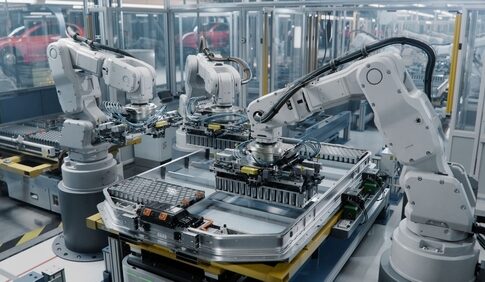
Micron’s new $9.3 billion memory plant in Hiroshima is not just another factory—it is a frontline bet that AI’s hunger for data will reshape global power and wealth for decades.
Story Snapshot
- Micron is investing ¥1.5 trillion ($9.3 billion) in a Hiroshima expansion to feed AI demand.
- Japan’s government is backing the project with billions in subsidies, sharing the risk and the reward.
- The plant will make high-bandwidth memory chips that sit at the heart of Nvidia-style AI processors.
- Shipments start around summer 2028, locking in a long-term bet on AI infrastructure.
Micron’s Hiroshima bet on the AI memory arms race
Micron Technology, a major American memory maker, has broken ground on a huge expansion of its plant in Hiroshima Prefecture. The project is worth about ¥1.5 trillion, or $9.3 billion, and aims to produce advanced memory chips for artificial intelligence systems. This is not a lab experiment. It is a full-scale industrial bet that AI will keep growing and that the world will pay a premium for the memory that powers it.
The Hiroshima facility will focus on high-bandwidth memory, the stacked chips that feed data to AI processors at extreme speed. These chips are the “oxygen supply” inside systems built with processors from companies like Nvidia. If you strip away the buzzwords, AI is math done on vast piles of data. High-bandwidth memory decides how fast that math happens and how many servers you need to buy to get the job done.
Japan steps in with billions to anchor semiconductor resilience
The Japanese Ministry of Economy, Trade, and Industry has committed hundreds of billions of yen in subsidies to support the project. That is not charity. Japan wants a stable supply of advanced semiconductors inside its borders after years of learning how fragile global supply chains can be. Public money lowers Micron’s risk and speeds up construction, but it also anchors jobs, skills, and critical technology on Japanese soil instead of overseas.
From an American conservative viewpoint, this move fits a growing pattern of nations using targeted industrial policy to secure key technologies instead of leaving everything to chance. When memory chips are a bottleneck for both national defense and private innovation, relying on one or two regions is reckless. Japan’s support here looks less like central planning and more like a big infrastructure project, closer to building ports or highways for the digital age.
What the plant will build and when it is supposed to pay off
Micron’s expansion will make advanced memory products, including high-bandwidth memory chips designed for generative AI workloads. Commercial shipments from the Hiroshima site are expected to begin around the summer of 2028. Delivery and installation of key semiconductor equipment are scheduled for the second half of that year, following earlier construction and cleanroom work. That timeline means investors are betting years ahead, far beyond the next market swing or news cycle.
Micron’s chief executive officer, Sanjay Mehrotra, told attendees at the ceremony that the company produced its first high-bandwidth memory wafer in Hiroshima. He said the new facility would strengthen delivery of next-generation memory products. These are the kinds of statements that matter more than daily stock chatter. A first production wafer signals real technical progress, not just press releases and artist drawings of future plants.
Boom, bust, and the skeptic’s case against big chip promises
Every large semiconductor project now faces a familiar chorus of doubts. Some retail voices claim the AI memory cycle is peaking and that plants like Hiroshima will worsen future oversupply. The history of chipmaking gives those fears some weight. Past expansions by companies in South Korea, Taiwan, and the United States have often run into delays, changing demand, or price crashes when too much capacity came online at once.
Micron breaks ground on a $9.3 billion expansion of its Hiroshima chip plant.
It will produce advanced memory, including HBM crucial for AI processors, with Japan backing project with up to ¥500 billion.
AI race isn’t just about GPUs anymore. Memory is the next battlefield. pic.twitter.com/IZUAr68vlH
— Sachi (@sachi_gkp) July 7, 2026
Construction claims in semiconductor fabs are notorious for problems with schedules and scope. Specialized tools arrive late, designs shift midstream, and labor shortages or local rules can stretch a “2028” date into 2029 or beyond. That does not mean Micron’s Hiroshima project is doomed. It does mean smart investors treat timelines as targets, not guarantees, and watch how quickly equipment orders, contractor progress, and local permits line up with the official plan.
Why long-term capital beats short-term noise
Global forecasts show semiconductor companies planning about $1 trillion in new plants by 2030. These investments do not happen for a single fad. They are tied to a deeper shift where computing moves from personal gadgets to giant data centers that run constant AI workloads. Even when overall chip shipments flatten, revenue can rise because each advanced chip carries more value and enables more high-end services. Memory sits right at that intersection.
Short-term volatility in stock markets, driven by algorithms and fast money, often tells a very different story. Prices jump on rumors of order cuts or new competition, then drop on macro headlines that barely touch real demand. From a common sense, conservative angle, Micron’s Hiroshima move looks less like speculation and more like building hard assets that will outlive several market cycles. Concrete, cleanrooms, and installed tools are harder to fake than social media narratives.
What to watch next: contracts, specs, and actual steel in the ground
The public record still lacks key details that will decide how successful this bet becomes. There is no open documentation of binding customer contracts for the Hiroshima high-bandwidth memory line, even though demand from major AI firms appears strong. Technical data sheets for the exact high-bandwidth memory versions to be made, including performance and power numbers, are also not yet widely available. Those documents will matter when buyers compare Micron against Korean and Taiwanese rivals.
Independent audits of the Japanese subsidy and of construction progress could further confirm whether the project stays on track and on budget. For now, the core facts are clear: Micron has started building; Japan is sharing the risk; and the goal is to feed the world’s AI systems with faster, denser memory. The open question is whether today’s bold plans will match tomorrow’s market reality, or whether Hiroshima becomes another chapter in the boom-and-bust saga that defines the chip industry.
Sources:
zerohedge.com, japantimes.co.jp, facebook.com, linkedin.com, investing.com, thenextweb.com, finance.yahoo.com, upi.com, a2globalelectronics.com, mckinsey.com