
A two-hour Vatican summit meant to cool tensions instead spotlighted how quickly America’s diplomatic messaging can unravel when symbolism and substance clash.
Why the Rubio-Pope meeting mattered beyond the optics
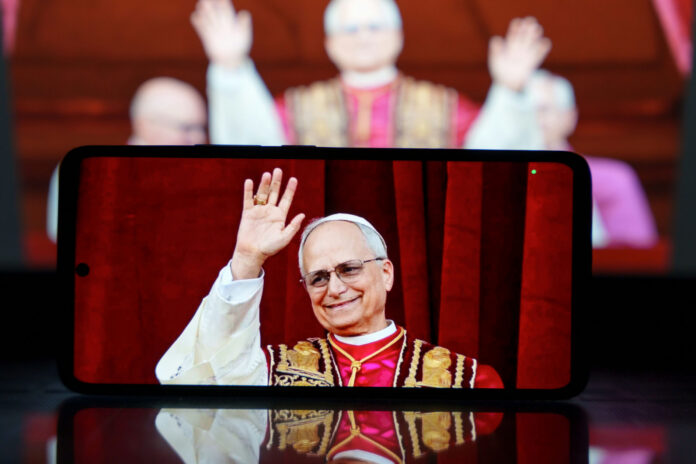
Secretary of State Marco Rubio traveled to the Vatican for a roughly two-hour meeting with Pope Leo XIV as the Trump administration and the Holy See spar over the Middle East, particularly U.S. military operations involving Iran. The meeting was widely treated as damage control after President Trump publicly attacked the pontiff earlier in the week. Vatican diplomacy tends to run on carefully chosen phrases, so even small signals can carry outsized meaning.
Rubio publicly described the meeting as evidence of a “shared commitment” to peace and human dignity, but the visible signals around the encounter moved the story in a different direction. Pope Leo XIV, described as the first American pope, also brings a unique dynamic: he is familiar with U.S. political culture but is still bound to the Vatican’s independent role. That independence is central to why this meeting became a headline at all.
What the Vatican actually said—and why it was read as a rebuke
After the meeting, the Vatican issued a brief statement describing the talks as “cordial” and affirming a shared commitment to good bilateral relations, while pivoting quickly to “countries marked by war” and “difficult humanitarian situations,” and stressing the need to work tirelessly for peace. In diplomatic language, what is omitted can matter as much as what is included. The statement did not signal endorsement of Washington’s approach.
The Pope’s own recent comments also frame the dispute more clearly than any headline about “humiliation.” Pope Leo defended the Church’s long-standing opposition to nuclear weapons and emphasized that the Church’s mission is to “preach peace,” while challenging critics to represent his position truthfully. That context is important because it undercuts the idea that this is merely personality conflict. It is a dispute about moral messaging, war, and nuclear risk.
The gift exchange became a proxy fight over seriousness and priorities
Reports highlighted Rubio’s gift to the Pope: a crystal football with the State Department seal. The Pope’s reported reaction—“Wow, okay”—and his return gift, an olive wood pen tied to peace symbolism, became the visual shorthand for the broader divide. Critics cast Rubio’s gift as tone-deaf given the subject matter, while defenders could argue that diplomatic gifts are often ceremonial and easily overinterpreted. The hard problem is that optics still shape outcomes.
For conservatives, the episode raises a practical question rather than a theological one: can the United States pursue hard-power objectives and still maintain functional relationships with influential institutions that shape public opinion worldwide? The Vatican cannot sanction the U.S. economy or move troops, but it can influence narratives, especially among Catholics who already feel tugged between faith and politics. When policy disputes are filtered through symbolism, it becomes harder to keep disagreements contained.
The political stakes: Catholics, credibility, and a government that feels off-track
Research cited in the coverage suggests support for President Trump among America’s roughly 53 million Catholics has been slipping, and this public clash with an American pope could accelerate that shift. The White House’s attacks on the Pope—especially the false claim that he supports Iran having nuclear weapons—created an avoidable credibility problem. Even voters who back America First policies often want discipline: accurate claims, coherent diplomacy, and less self-inflicted distraction.
Democrats will predictably seize on the optics to portray the administration as chaotic, while many Republicans will focus on defending U.S. strategic interests against Iranian aggression. Both reactions miss a growing, bipartisan frustration: Americans see institutions—from Washington to global bodies—acting like they answer to their own incentives rather than to ordinary people. When diplomacy looks like theater, it feeds the belief that elites are playing games while families deal with inflation, security, and social breakdown.
Vatican humiliates Rubio after tense summit with Pope… https://t.co/YNFiC5ydyB
— SATANYAHU (@Outli3rThe) May 7, 2026
For now, the concrete policy outcome of the Rubio-Pope meeting is unclear from available reporting beyond the Vatican’s careful language and Rubio’s positive public framing. What is clear is that relations remain strained and the Vatican signaled no shift toward endorsing U.S. military posture. If the administration wants fewer foreign-policy headwinds, it will need tighter message discipline at home and more precision abroad—because in diplomacy, a “cordial” statement can still mean “no.”
Sources:
Vatican humiliates Rubio after his tense summit with pope
Rubio humiliated as cheap football gift to Pope Leo immediately backfires