
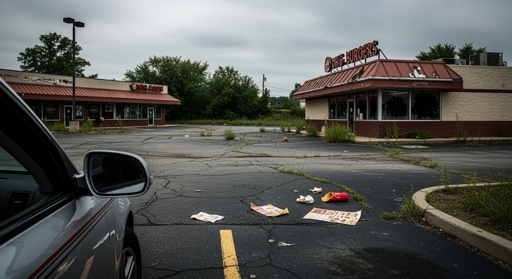
Hardee’s franchisee collapse shutters 77 restaurants across nine states, wiping out the chain entirely in Wyoming and leaving rural Americans without a key dining option amid ongoing economic pressures.
Franchisee Bankruptcy Triggers Mass Closures
ARC Burger LLC, based in Marietta, Georgia, filed for Chapter 7 bankruptcy liquidation on April 20, 2026, in the U.S. Bankruptcy Court for the Northern District of Georgia. This action sealed the fate of all 77 Hardee’s locations it operated across Alabama, Florida, Georgia, Illinois, Kansas, Missouri, Montana, South Carolina, and Wyoming. The filings reveal $29 million in total debt, stemming from chronic payment failures that began in December 2024. Hardee’s had terminated franchise and sublease agreements in September 2025 after ARC owed over $6.5 million in fees, royalties, advertising, technology, training, rent, and taxes. The franchisor filed a lawsuit on November 21, 2025, in the U.S. District Court for the Middle District of Tennessee to recover the funds. Operations wound down by the end of 2025, with coordinated shutdowns like 28 Midwest stores in Missouri on a single day and Wyoming’s last two locations.
History of Failure Under Two Operators
These 77 locations trace back to Summit Restaurant Holdings, which filed Chapter 11 bankruptcy in 2023, closed 39 stores, and sold the remaining 80 to ARC Burger. ARC lost three more before the mass closure, underscoring persistent unprofitability in rural and small-town areas such as Montana’s Helena, Wyoming’s Buffalo and Gillette, and South Carolina’s Hampton. Low customer traffic in Mountain West, Midwest, and Southeast markets doomed both operators. This pattern follows precedents like a Carl’s Jr. franchisee bankruptcy and ongoing disputes with Paradigm’s 76 locations, putting nearly 9% of Hardee’s U.S. system at risk. Unlike piecemeal shutdowns, this represented a clustered, rapid exit after two franchise failures.
Hardee’s Steps In to Reopen Locations
Hardee’s Restaurants LLC moved decisively post-bankruptcy, announcing plans to assume ownership and resume operations at more than 40 of the closed sites. Nearly two dozen have already reopened in Georgia, South Carolina, and Mississippi, with hiring underway in Georgia, Missouri, and South Carolina. A spokesperson confirmed to PEOPLE the corporate takeover aims to stabilize the system and minimize long-term disruptions. Chapter 7 liquidation means ARC’s assets will be sold without reorganization, allowing Hardee’s to reclaim prime spots. This shift reduces reliance on risky franchisees, prioritizing direct control for consistent service in underserved areas.
Employees and creditors bear immediate losses, including 17 workers at one South Carolina store and ripple effects from $29 million in debts. Customers in rural counties now lack options, with Wyoming left entirely without Hardee’s.
Fast-food chain Hardee’s closing 77 restaurants across nine states https://t.co/fvYxjJZ80P
— ConservativeLibrarian (@ConserLibrarian) April 24, 2026
Impacts on Rural Communities and Industry
Short-term effects hit hard in small towns, creating access gaps for families relying on affordable fast food amid high energy costs and inflation from past fiscal mismanagement. Job layoffs from 28 Missouri stores and others strain local budgets, disrupting daily routines in areas with few dining choices. Long-term, Hardee’s corporate model promises stability, countering franchise vulnerabilities exposed here. Broader fast-food sector faces similar risks, as seen with Paradigm’s disputes. For working Americans in flyover country, this underscores the need for sound business practices free from overregulation that chokes small operators.
Sources:
Hardee’s Closed 77 Locations After A Franchisee Stopped Paying Its Bills In December
Hardee’s Franchisee Files For Bankruptcy After Dramatic Closures