
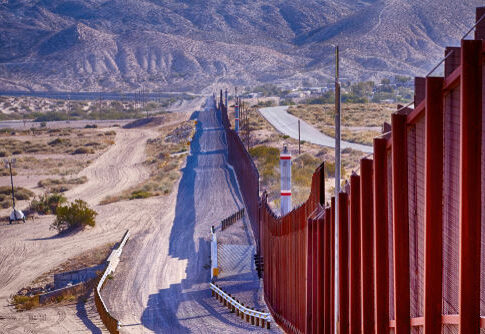
A new federal push to build more border wall in West Texas is forcing ranch families to choose between signing away land access now or risking that Washington seizes their property later.
Story Snapshot
- Customs and Border Protection is sending “right-of-entry” and construction letters that warn holdouts they could face federal condemnation and eminent domain.
- Texas law now bans the state from using eminent domain for its own wall, but that protection does not stop federal land seizures.
- Past border projects show Washington can take land first and argue about “just compensation” for years in court.
- Some landowners report survey errors and pressure tactics, raising fresh fears about property rights and government overreach.
Federal Wall Powers Collide With Texas Landowners’ Rights
In far West Texas, ranchers and long‑time families are being told in plain terms: cooperate with new border wall plans or risk losing your land in court. Federal law gives the Department of Homeland Security broad power to build barriers, roads, and surveillance along the southern border, and to “contract for or buy any interest in land” that officials believe is essential for border control.[1] That authority includes the use of eminent domain to take private property for public use if owners refuse to sell.
To speed up work, officials have leaned on waiver powers first granted under the Illegal Immigration Reform and Immigrant Responsibility Act and later expanded by the Real ID Act.[1] These waivers allow the Secretary of Homeland Security to set aside many federal laws that would normally slow big projects, including environmental and land‑protection rules.[1] Critics argue that when Washington can waive safeguards at will, landowners are left with fewer tools to demand fair treatment, honest appraisals, and full transparency before their property is condemned.
“Right-of-Entry” Letters and the Threat of Condemnation
Recent letters from Customs and Border Protection offer West Texas landowners a stark set of choices. Owners can sign a right‑of‑entry and construction agreement, which lets surveyors and contractors onto their property and promises later talks about sale price.[3] They can try to negotiate an easement or a voluntary sale on their own terms. Or they can refuse and wait for a federal condemnation case, where the government asks a judge to grant title using eminent domain and deposits an amount it claims is “just compensation.”[3][6]
Under federal procedure, once a “declaration of taking” is filed and a judge signs off, Washington can seize control of the land even while the court fight over value drags on.[4] Past border wall rounds show how rough that process can be. A fact sheet on southern border seizures reports that after the Secure Fence Act, the government filed more than 360 eminent domain lawsuits in South Texas and that 60 to 70 cases were still unresolved over a decade later because of disputes about compensation.[4] For many families, that history makes today’s letters feel less like an offer and more like a threat.
Texas’ Eminent Domain Ban and the Federal Workaround
Texas lawmakers, reacting to abuses and public anger, banned the use of eminent domain for the state’s own border‑wall program in 2021.[4] That means state officials must rely on voluntary easements and one‑time payments, and they cannot simply seize ranch land for Governor‑backed wall segments. Reports from the Texas Tribune and CBS News show that at least a third of landowners approached by the state have refused to sign, forcing Texas to build in more remote areas or leave gaps where holdouts stand their ground.[4][5]
But that state‑level protection does not bind the federal government. Under long‑standing Supreme Court doctrine and federal statutes, once Congress has authorized a border‑wall project and funded it, Washington’s taking power is extremely hard to defeat in court.[6] Legal analysis aimed at border landowners notes that the only real defense is to prove the government lacks authority or that no “reasonable” person could see the tract as tied to the project, a bar so high that most challenges fail.[6] In practice, owners are pushed to focus on the price of the taking, not on stopping it.
Sloppy Surveys, Waivers, and the Risk of Abuse
Current West Texas conflicts echo problems documented in earlier rounds of wall building. A University of Texas human‑rights briefing describes how the Department of Homeland Security and the Department of Justice cut unfair real‑estate deals, raised appraisal thresholds, and in some cases condemned or paid for the wrong tracts, forcing owners to spend time and money just to prove what they already owned.[3][4][9] Investigators found that Homeland Security quietly waived parts of a federal law meant to protect property owners, including negotiation rules and conflict‑of‑interest limits for appraisers, to speed up seizures.[9]
In far West Texas, the threat of land seizures for a border wall has families on edge.
In the Big Bend region, where some families have lived for generations, government letters seeking access to their land is sparking fear and resistance. https://t.co/iM6GEXs14i
— Texas Tribune (@TexasTribune) June 16, 2026
Today, some West Texas landowners say the new survey packets and maps they received contain obvious errors in boundary lines or even in listed ownership, raising red flags about accuracy and fairness.[10] Others, along with property‑rights groups, warn that “right‑of‑entry” agreements can open the gate to heavy equipment and construction before a true sale or condemnation is in place.[7] A Texas‑focused legal guide cautions that the federal government can take possession quickly through a declaration of taking, leaving families to face a long and expensive fight if they think the offer is too low.[6] For conservative Texans who value both secure borders and strong property rights, that trade‑off is growing harder to swallow.
Sources:
[1] Web – Texas Landowners Face a Difficult Decision: Allow Border Wall or Lose …
[3] Web – Lawsuit Challenges Big Bend Border Wall Construction
[4] Web – [PDF] obstructing human rights: the texas-mexico border wall
[5] Web – [PDF] Eminent Domain Along the Southern Border: Government Seizures …
[6] Web – Official Border Wall plans have been released for the Big Bend. If …
[7] Web – Response to Public Comments Regarding the Construction of …
[9] Web – As landowners resist, Texas’ border wall is fragmented and built in …
[10] Web – Landowner resistance forces Texas to build wall in remote areas
There is a simple solution, a 99 year lease. As usual bureaucrats will make the wrong move. Politically, it will alienate GOP voters, maybe that’s what the govt. apes want.